meta data for this page
- en
<insert previous page>
Launcher Actions
Dialog selections are discussed below the image. For navigation to an item make a selection in the Launcher Actions image.

Launcher Actions dialog. Make selection above.
Object Design Menu (top)
There are 2 demo icons on the top menu in this image for visitors to use in this ui tour:
 - Action - This allows the user to link a selected object's action … what happens when the object is tapped or swiped.
 - Option - This provides for the customization of the selected object. This ui tour can not show the actual object changes, but will expose each visitor to what is available, what each dialog element can cause to happen, and what happens to navigation once selected.


Text
- Created by selecting “Default” which does nothing except place “Text” on the page to convey whatever wording that is needed. Editing and formatting of “Text” is available from the Option icon. See discussion of Mixed Graphic which includes more detail on editing and formatting text.
Launcher Actions Reviewed
These are Launcher actions created when selecting Add Object > Graphic > Text > Launcher actions. With the exception of Default action, each will result in the action being placed on the page as text (since the object is text and not image) with an almost verbatim description of the action.
The initial characters “Text” will be modified by any launcher action dialog which offers a specific user input.
Of course, the text elements of all these Launcher actions can be changed with the object selected and entering Option Edit mode. To see this in the ui demo click here and scroll to the Option area for instructions. Text gives a physical screen presence to this launcher action but it could be hidden with an enabled tap to that screen area (or other object) which would result in the launcher action (see Object Hiding). Also a launcher gesture could be used to initiate the action (see gestures).
If the user had selected Add Object > Graphic > Image > Launcher actions, an opportunity to select other containers (image, window, folder, etc) would be given. However, the end result would still be the Launcher action discussed below.
The above image shows a launcher page as if ALL of the Launcher actions (plus plain text) had been selected. That could happen but probably not. It is done here for demo purposes only.
Below will list and give a brief description of what each action provides. If the action requires additional user input a link (if applicable) to view the input dialog will be available in the description.
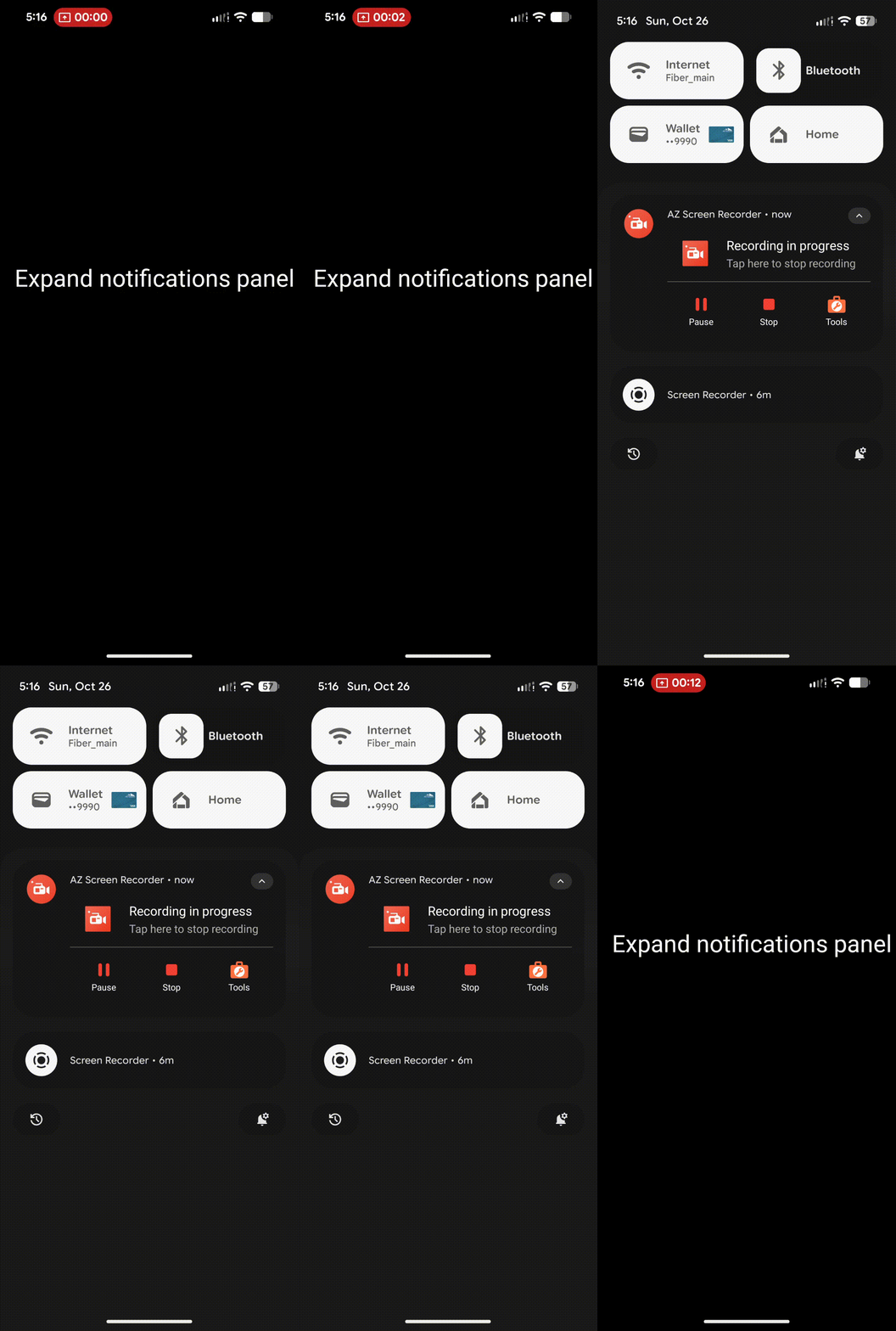
Expand notifications panel
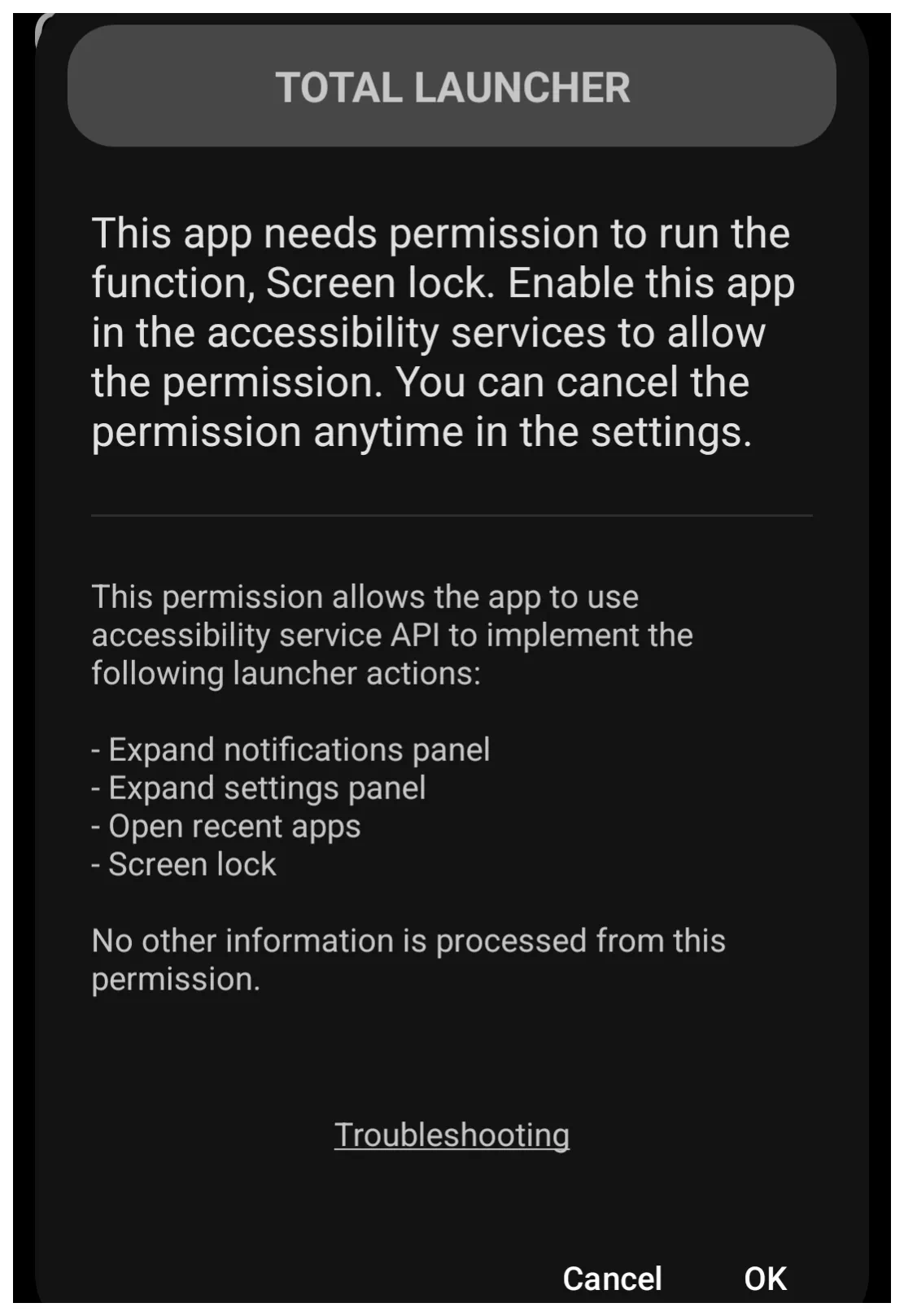
- This is the Notification Shade that drops down when swiping down from the top of the screen. See the demo of this action: Expand notification panel. Also, the user may be presented with this Total Launcher initial permission notification with this dialog.
Expand settings panel
- Also known as Quick Set Tiles that have been set to show but can be expanded to edit, re-order/show all such tiles. See the demo of this action: Expand settings panel. Also, the user may be presented with this Total Launcher initial permission notification with this dialog.
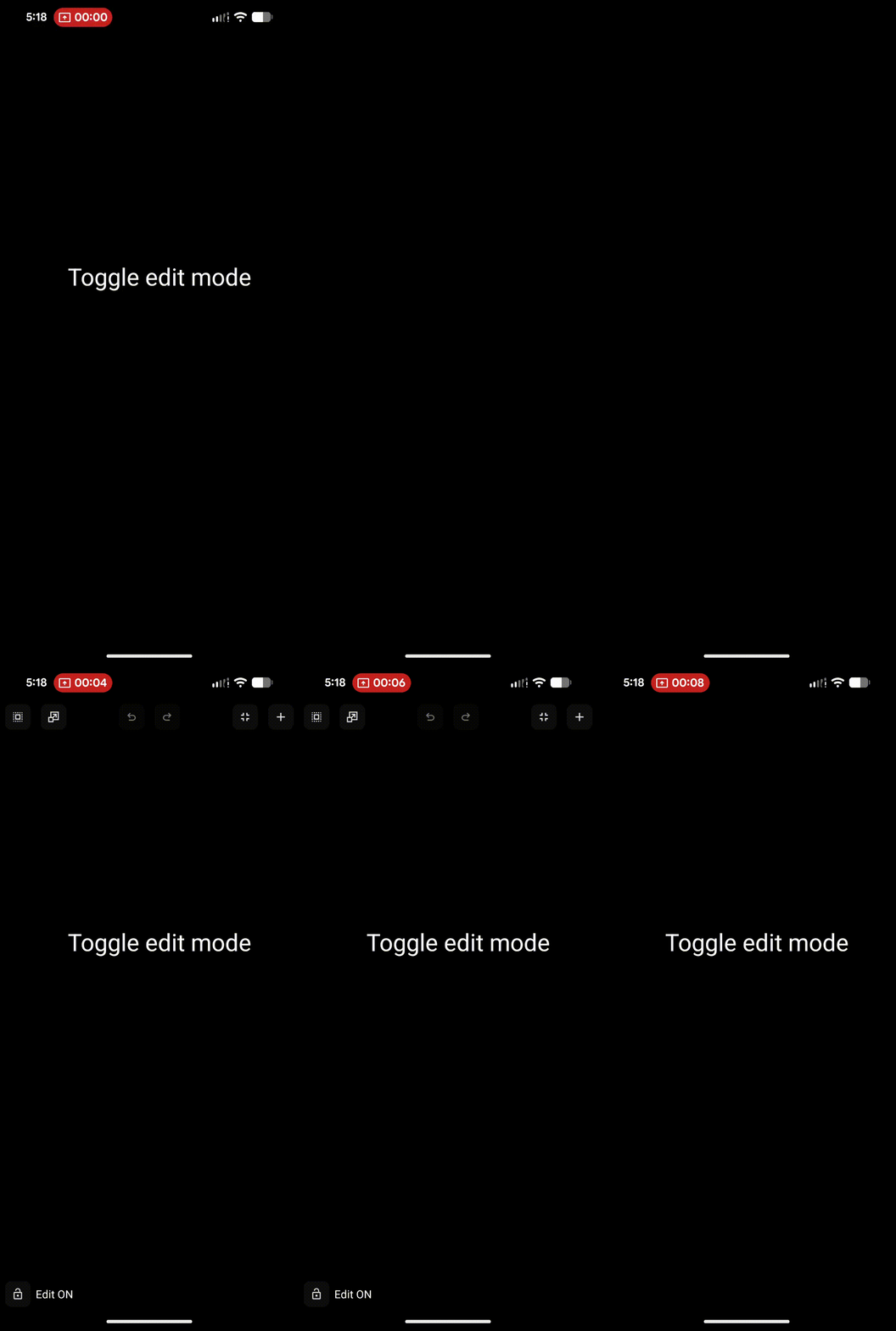
Toggle edit mode
- Tap to instantly be placed in Edit On mode (if the user has not required a password). See the demo of this action: Toggle edit mode.
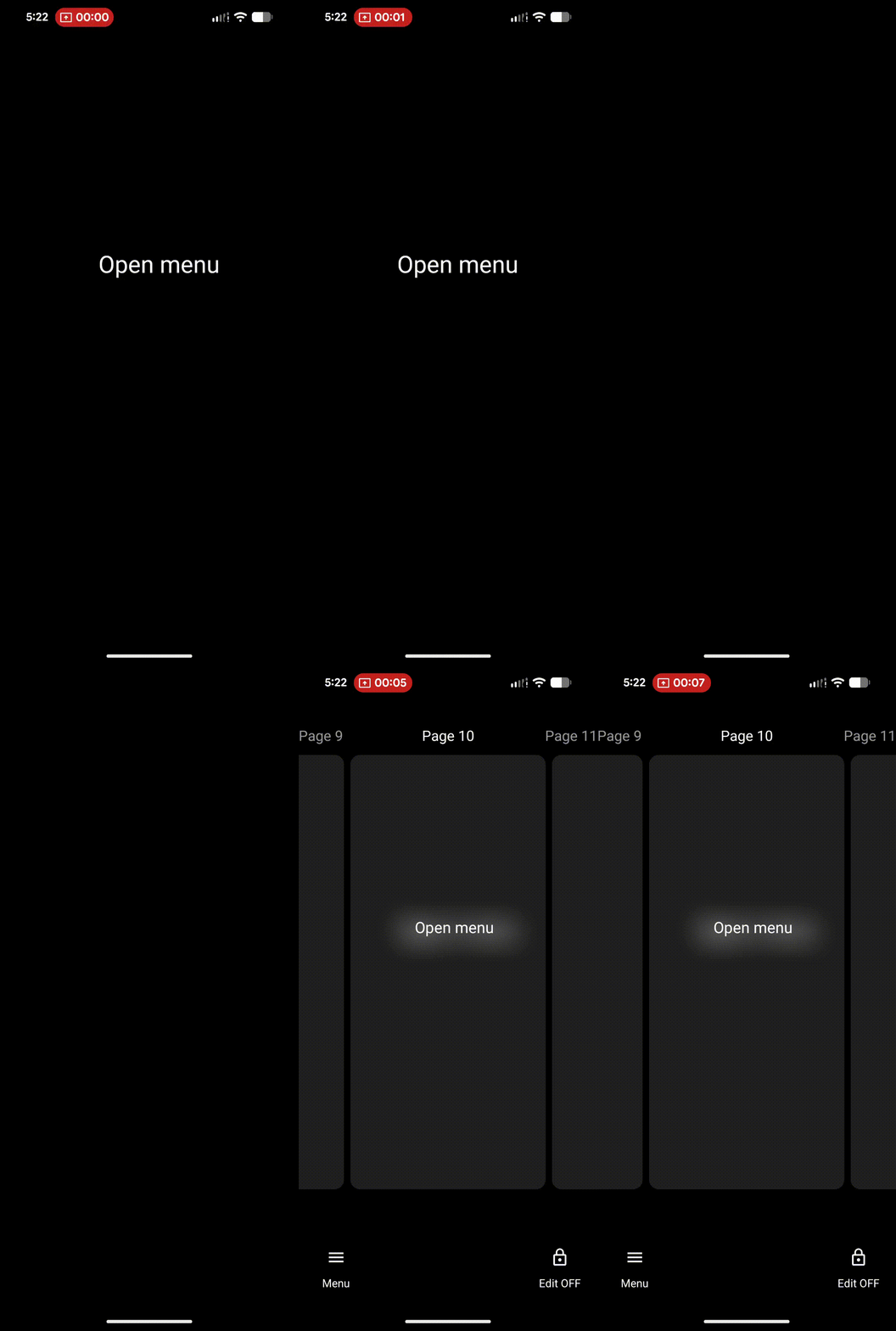
Open menu
- Tap to access the Main Menu (Edit mode is off). Password still required if set. See the demo of this action: Open menu.
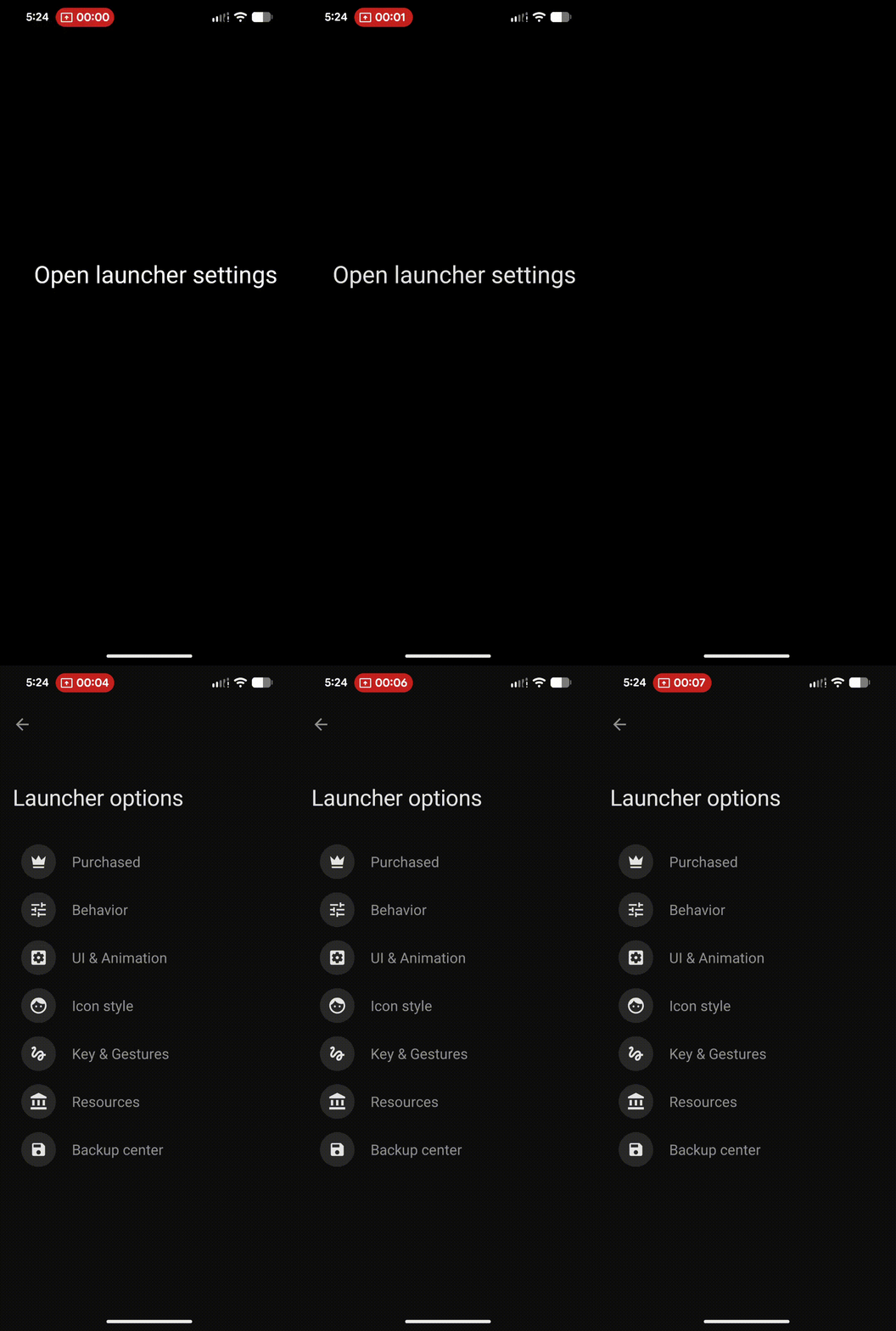
Open launcher settings
- Tap to access the Main Menu's Launcher options (Behavior, UI & Animation, Icon style, Keys & Gestures, Resources, and Backup center). Password still required if set. See the demo of this action: Open launcher settings.
Show status bar
- This is a one-way setting (vs a toggle) to either show the system's status bar located at the top of screen which shows time, notification icons, wifi strength, data strength, and battery status. The launcher's UI & Animation section has a setting to hide the status bar, so this Launcher action allows temporary viewing with any activity (screen touch, page change, etc) reverting back to hidden status (if so set). See the demo of this action: Show status bar.
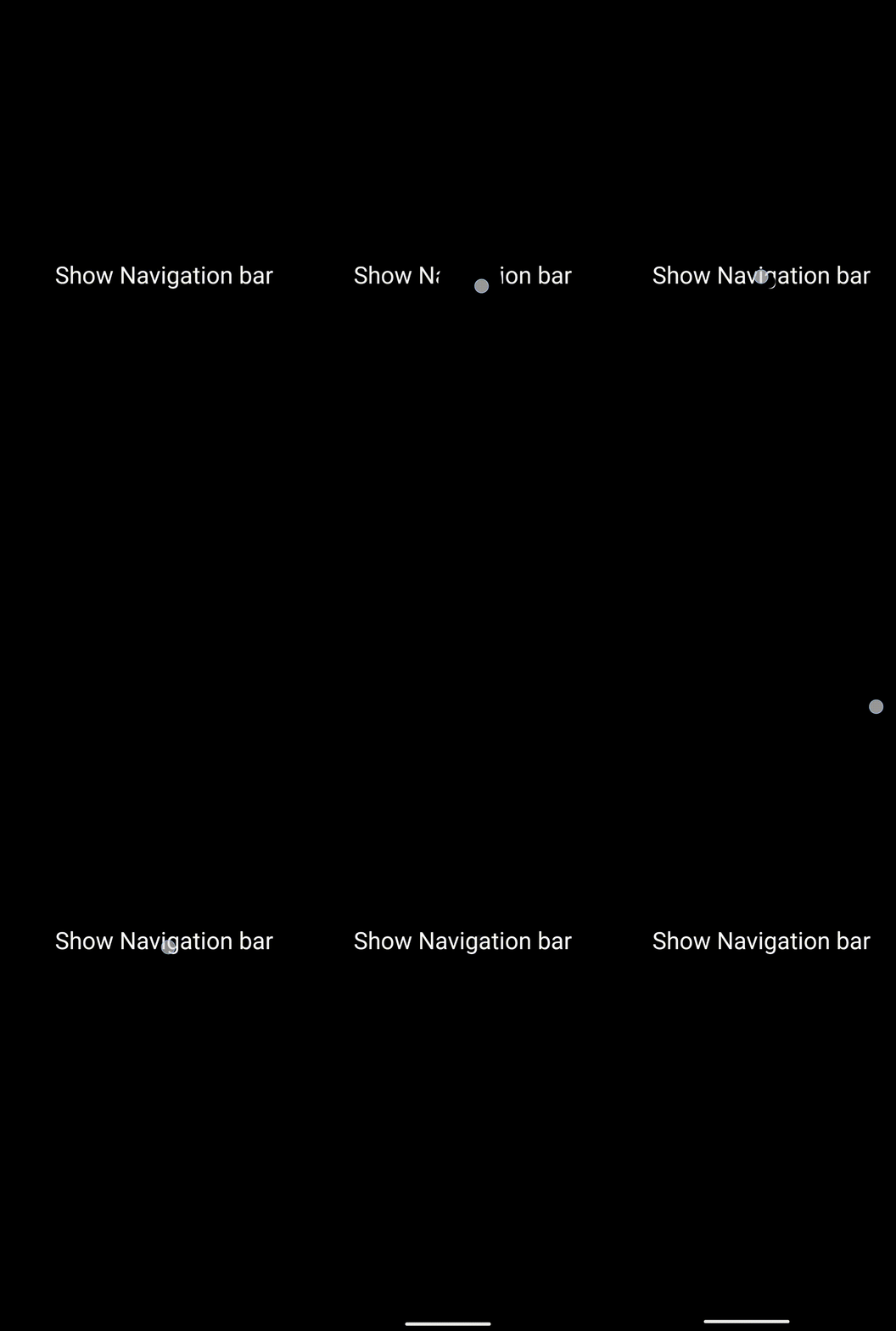
Show navigation bar
- Some Android versions and devices have a setting for the bottom of the screen to contain buttons for navigating the device (Back, Home, and Recent apps). If so and the user prefers not to have that showing at all times, the launcher UI & Animation section has a setting to hide the navigation bar. This Launcher action allows temporary viewing and usage, then reverts back to hidden status if so set. See the demo of this action: Show navigation bar.
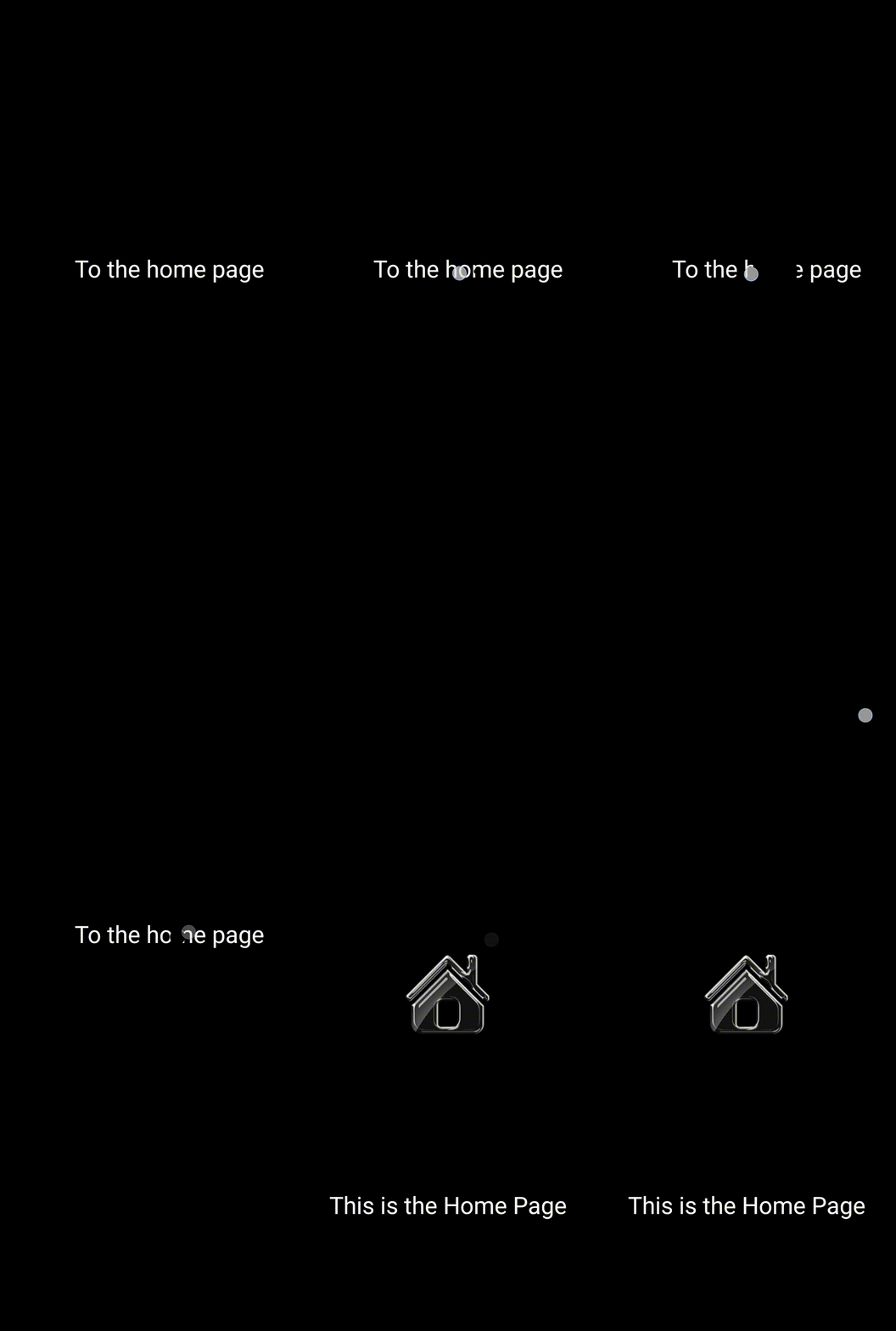
To the home page
- While current Android versions provide for a “swipe up from bottom” to return to home page, some multi-page setup may be better suited to have a screen location for the user to select. This text-based option would enable the user to automatically navigate to the home page. See the demo of this action: To the home page.
To the previous page
- Automatically navigates to the page the user was on prior to activating the action … in other words, the previous screen which may or may not be adjacent to the current screen.
To the left page
- Automatically navigates to the page left of the current focused page.
To the right page
- Automatically navigates to the page right of the current focused page.
To a selected page
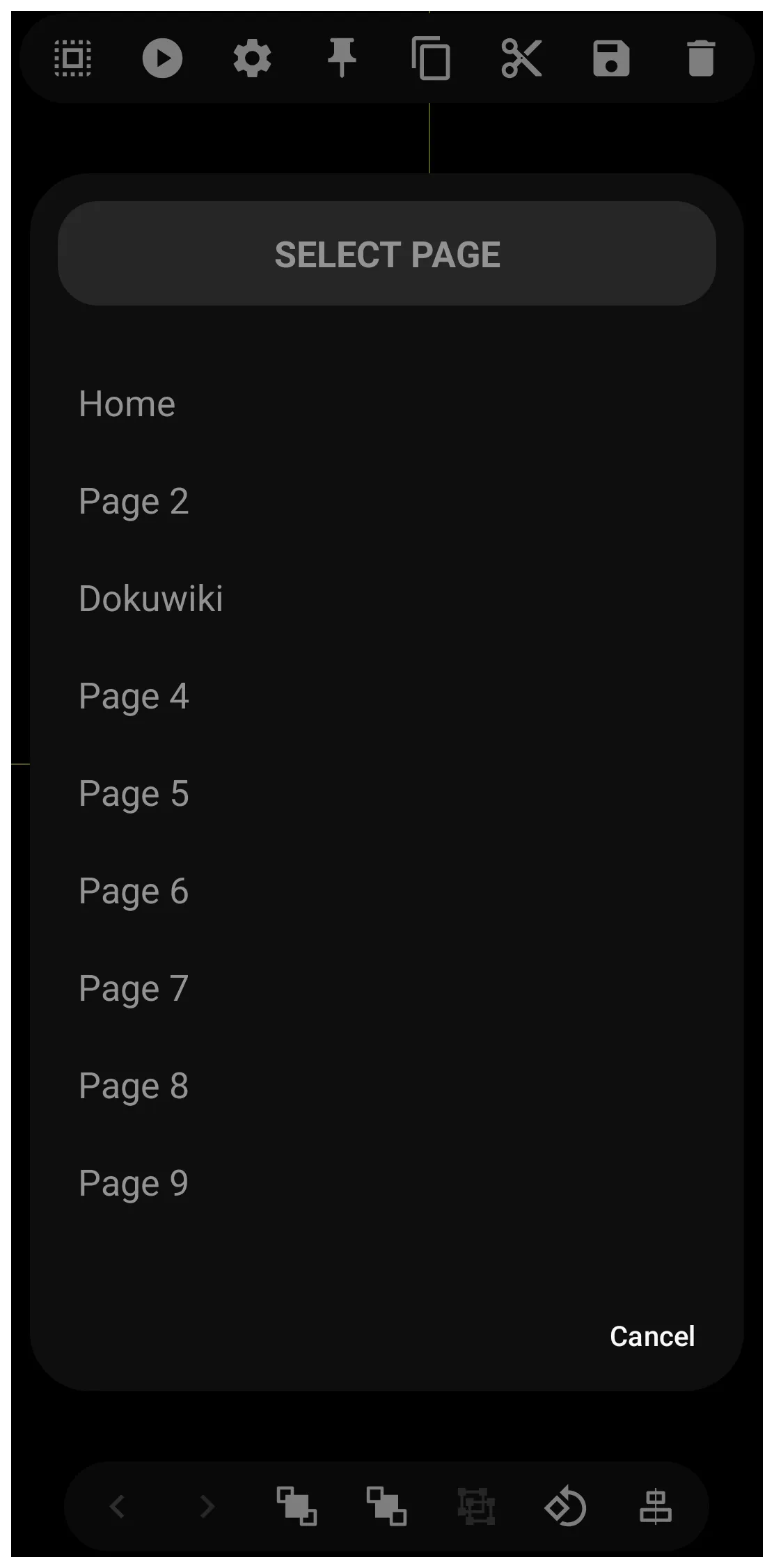
- Automatically navigates to a predetermined page selected at Launcher action user input. The selections are listed by page label (title). See the input dialog which in this case is a 9-page setup. Note Total Launcher internally records page sequential numbers even for user-named pages but displays any user-names. To learn more about assigning a page label (title) see
Item Fin Edit On.
Open the left drawer
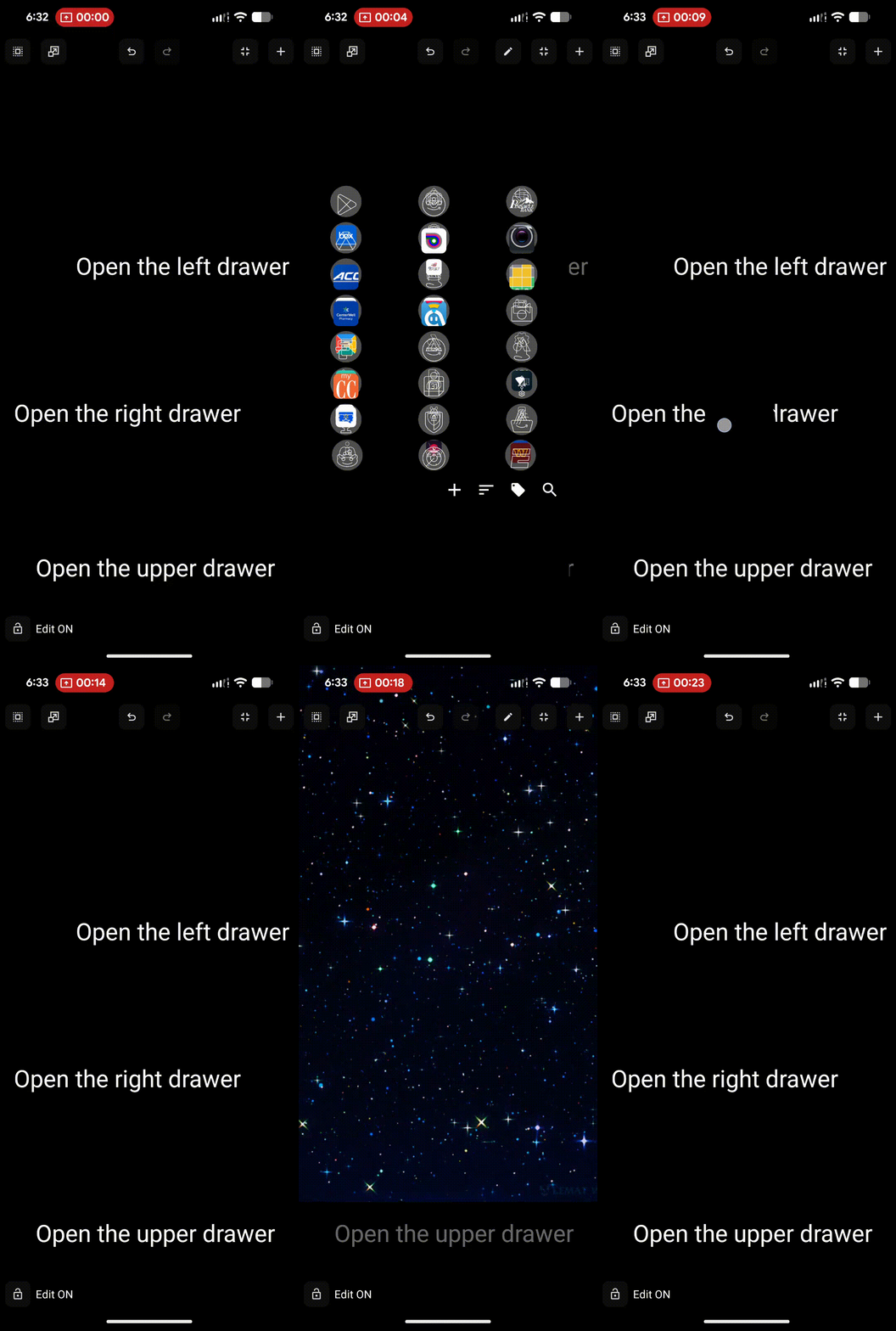
- A drawer is “container” which holds objects and often hides itself. When an action directs it to come forward it slides out, over existing objects, to allow access to its contents which could include apps, folders, windows, shortcuts, built-in launcher actions, images. This discussion covers the left drawer. Other specific originating locations are the right, upper, and lower parts of the screen. The only unique characteristic between these 4 is location, otherwise they all have the same capabilities. Via Main Menu > Launcher Options > UI & Animation, the Sliding Drawer section has checkboxes to enable left, right, upper, and lower drawers which automatically populate with the device's installed apps. Such drawers can be customized by the drawer's option icon when the container is selected. This text-based Launcher action object will initiate this opening on the drawer. See Widgets which includes a section on app drawer widgets for a detailed review. See the demo of this left drawer action: Open the left drawer.
This user has found an apparent undocumented feature. A tap on the right or left screen edge - center will open the left or right app drawer. The top and bottom drawers will not open with the screen edge tap. Please comment in this wiki should this be confirmed or not confirmed on other devices by users.
Open the right drawer
- See as Open left drawer above.
Open the upper drawer
- See as Open left drawer above.
Open the lower drawer
- See as Open left drawer above.
Close sliding drawer
- This launcher action will close any sliding door (left, right, upper, lower) that is open. Drawers can be closed by Android's built-in gesture: swipe in the direction it would close. If a user decides to use this action, placement of the text object on the page will not be a useful design since the drawer, when open, will cover the full screen by default. While the drawer itself could be manually resized (difficult), the apparent shield does not allow touching any objects below it. Therefore, alternatives to swiping closure are locating and positioning the text object within the drawer or including the launcher action within a sequence.
Scroll the current page to
* This action allows an input of 0 to 100 which refers to scrolling a page with a continuous vertical layout to a specific position. The input number (0-100) functions exactly like the position of a vertical scrollbar handle. This action is only effective if the page has been designed to vertically scroll (see How To: Page Scrolling - Vertical). * How to determine the value: The value represents the percentage of the Available Scroll Range. Using this simple alignment rule the result is:
- 0: Aligns the Top of your page content with the top of the screen.
- 50: Aligns the Exact Middle of your page content with the middle of the screen.
- 100: Aligns the Bottom of your page content with the bottom of the screen.
See a demo explanation of this launcher action.
How does it work?
Imagine a physical scrollbar on the side of your screen.
- Setting the value to 0 is like dragging that bar all the way up.
- Setting it to 100 is like dragging it all the way down.
- Setting it to 50 puts the scrollbar exactly in the middle, centering the page content on the screen.
☛ This action only functions on pages where the content height exceeds the screen height. If the page does not need to scroll (content fits on one screen), the action will have no effect. The most effective use of this launcher action would be in a sequence using a launcher action Go to page, Scroll current page to 'n' where the target page is designed with an extended vertical scroll and the targeted object (widget?) position is to be placed at an optimal viewing position.
Set home page to
- Creates a text object to manage which setup page is designated as the setup's home page. During creation a dialog lists all setup pages here with the page title assigned to each. The user will designate which page is to be considered the home page. This is a static setting, but additional text objects and employing
Tap-on-Actioncan be set for designating other home pages (even with multi-directional swiping). This is useful for different scenarios, such as home, office, travel, etc.
- It is possible to combine this
Set home page toaction with the automation app Tasker (and possibly MacDroid) to create an automatically switch “home” pages based on time of day or geo-location or wifi source. See “How To: Set Launcher Page based on Location / Wifi / Time with Tasker integration > current” to implement this.
Open window by name
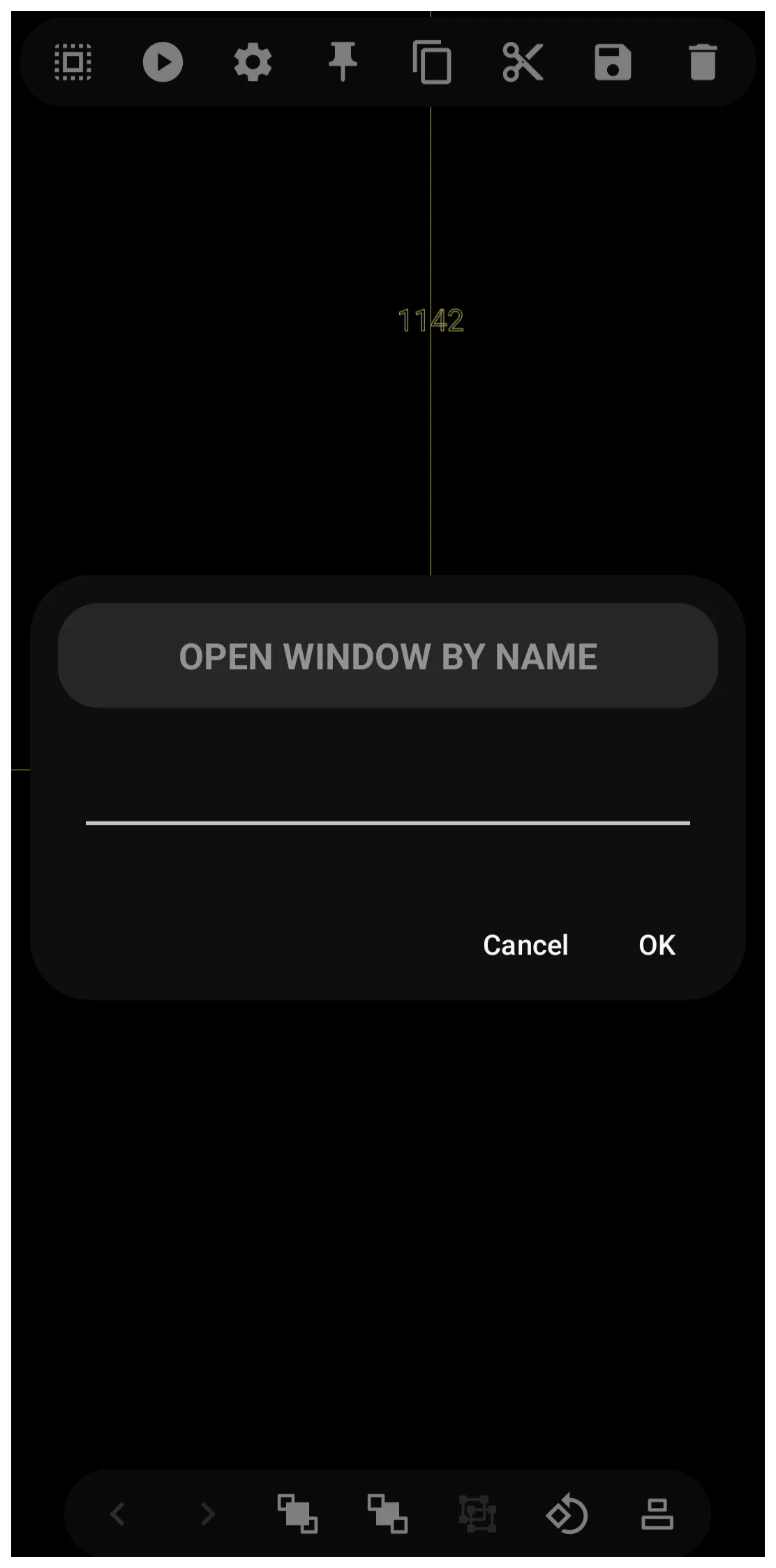
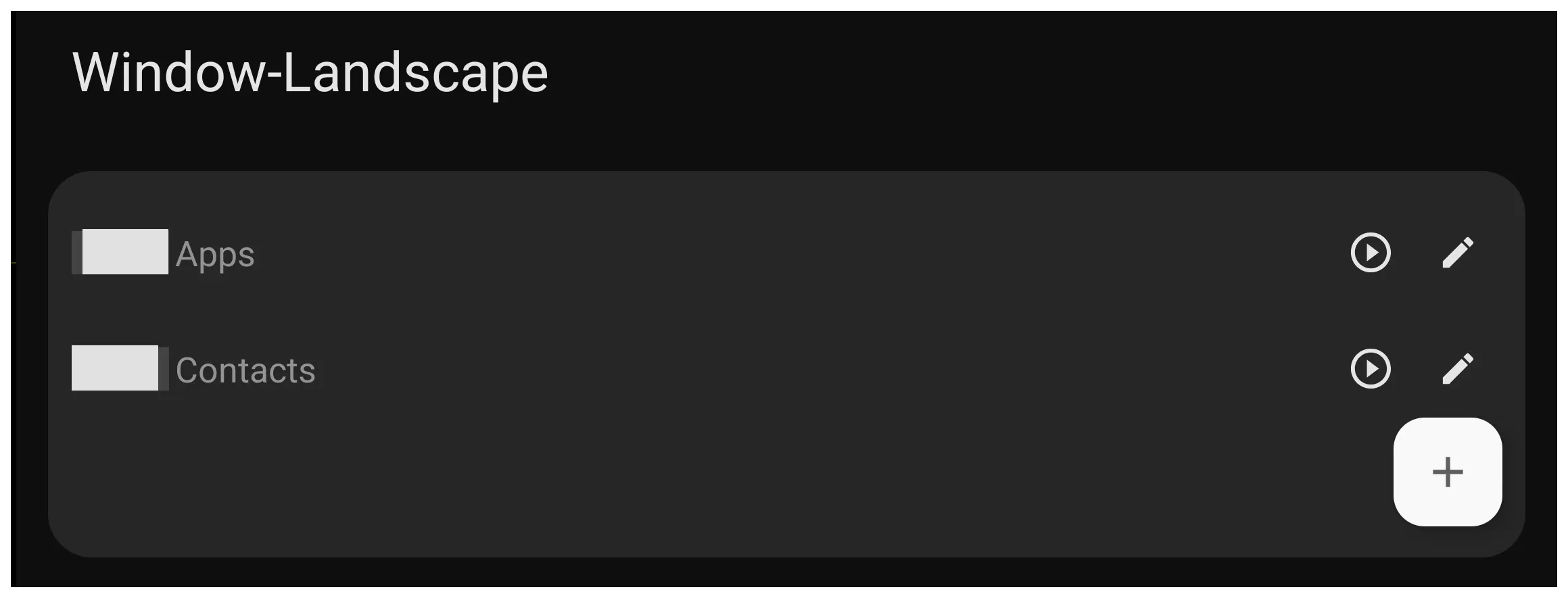
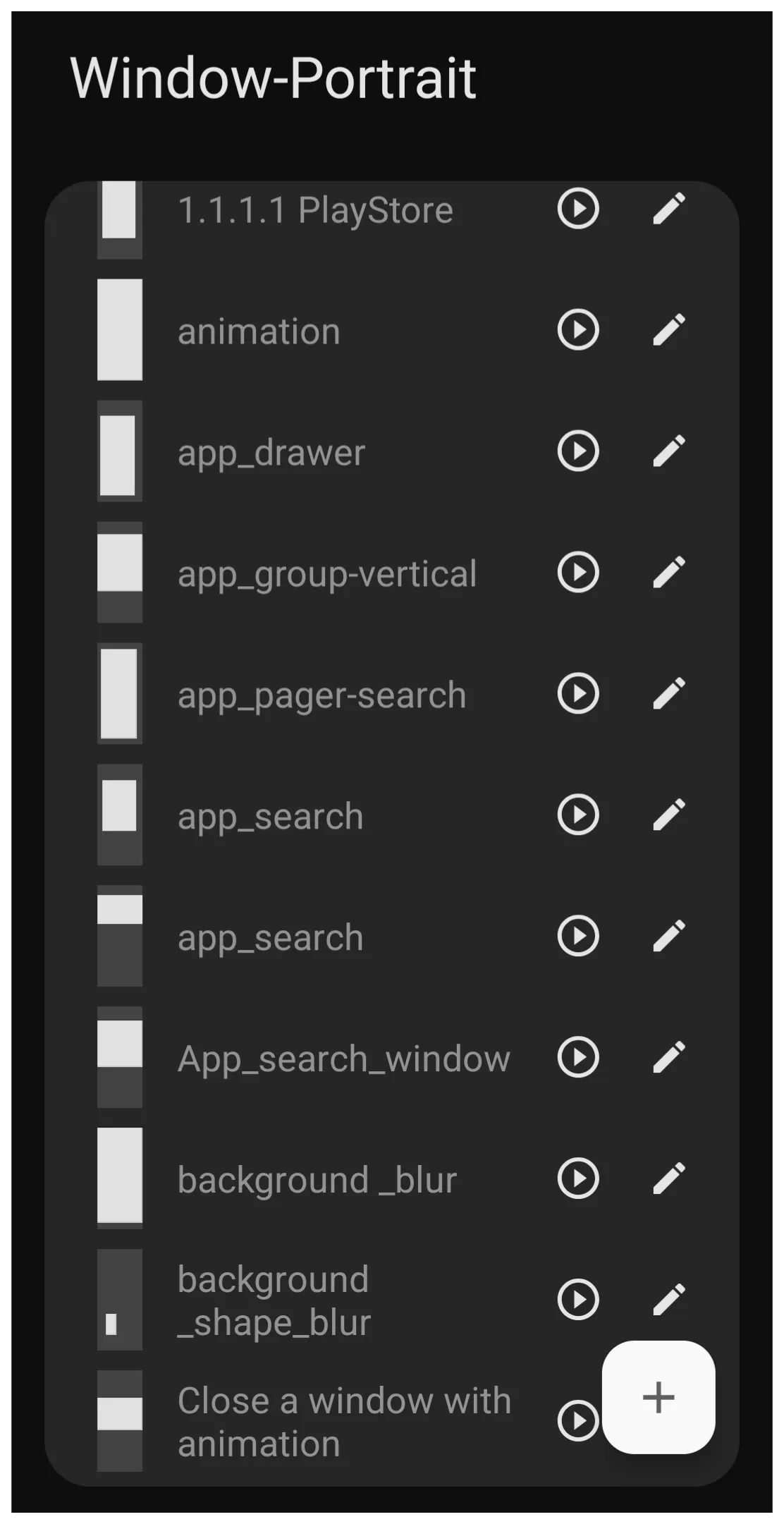
- The open window named by the user in this dialog for this launcher action setting will be opened. Note when creating a window, a title is requested. That is the name to be used in this action and it must match (no blank spaces, only underscores). It is unusual that the developer requires character entry of the window name in lieu of providing a dialog with the existing names listed (as done for the launcher action
Close a window).
Close the topmost window or folder
- When multiple windows or folders are open at one time, this text object will close the topmost, most likely the most recently one opened.
Close the topmost folder
- This action will close the topmost folder (not a window) which is most likely the most recently one opened.
Close all windows and folders
- Closes every open window or folder that is open.
Close a window
Note: Since screen ratios differ between portrait and landscape, the user wishing to create windows for both positions should configure their use (add the object while in the positional mode) for the proper reproduction.
Change wallpaper
- Tap this text object to cycle through wallpaper located in the folder as designated by
Launcher Options > UI & Animation > Wallpaper. The cycling is alphabetical by filename, so if a user-defined sequence is desired then re-name the files using a numerical pre-fix.
Open tag
- Tap to open a pre-selected tagged group of apps, windows, or folders. An example of that dialog is here showing both the built-in and user-created tags together. Tags can be user-created and assigned within app widgets with built-in tags available for the user to manage at
Launcher options > Behavior > App drawer > Built-in tags. For additional discussion see Tags.
App search
- This is a quick application search widget, similar to the widget “App Drawer”, but not customizable. It immediately displays the keyboard for full alpha-numeric search. A sample of this widget and how it can be customized can be viewed at Customizing App & Contact Search.
Contact search
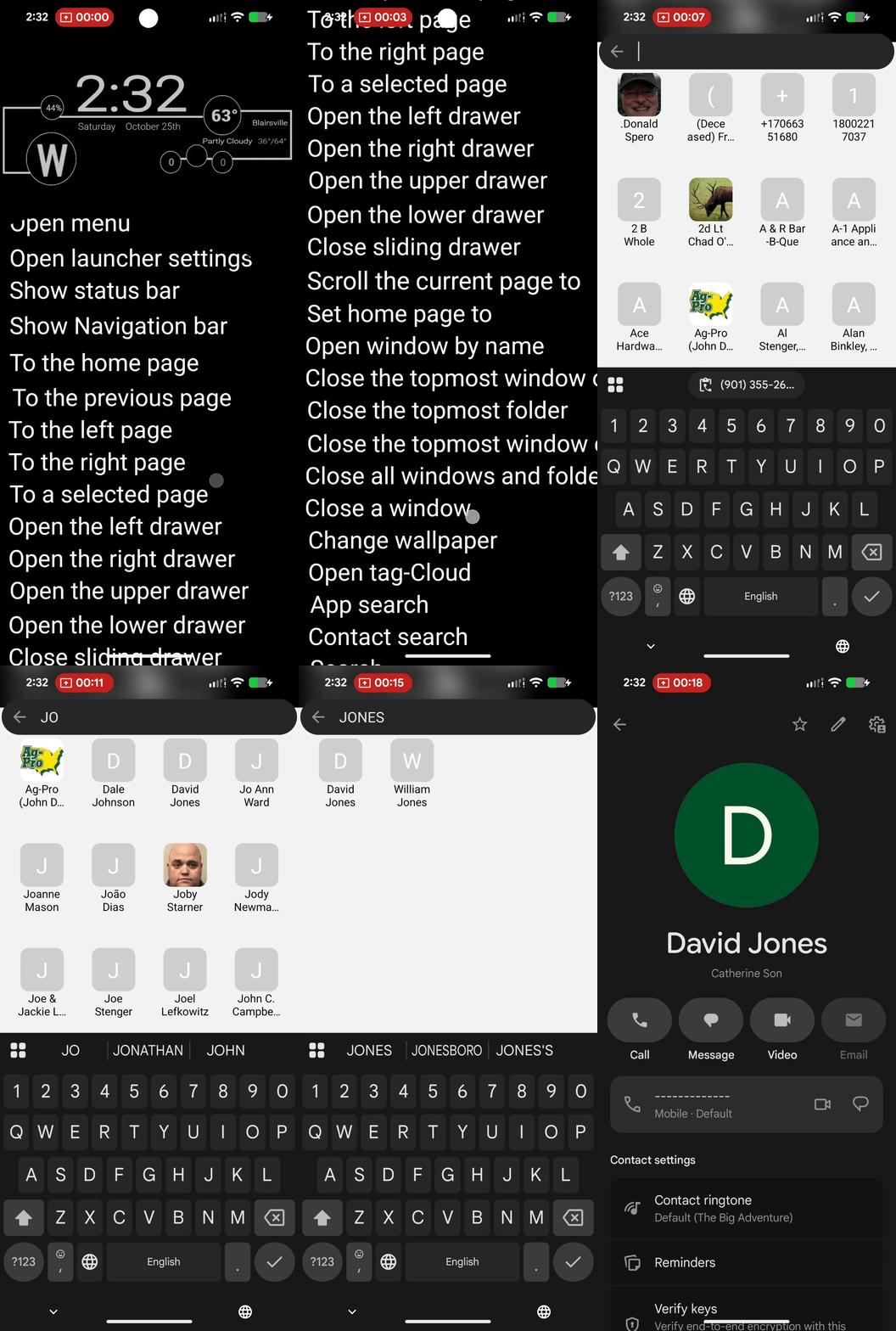
- This opens a widget-type screen with a contact icon grid on the top half of the screen and a full keyboard on the lower half. Search results are immediate by sequential key entry. Tapping the contact icon desired opens the phone app contact data page for dialing. See the action demo for contact search.
Search
- Opens an internet search dialog with full keyboard support which defaults to Google. There are no customization options. If another search engine is desired, consider using the launcher action Open URL for the search engine's url.
Open recent apps
- This presents a card-type view of apps (scrolling left or right) which have recently been used, allowing a quick switch between them. Prior to Android 10, this was performed with a dedicated navigation icon at the bottom of the screen. After Android 10, this is offered by a swipe up gesture from the bottom of the screen. Also, the user may be presented with this Total Launcher initial permission notification with this dialog.
Screen lock
- Returns the device to screen lock state provided by the Android settings, usually a dark, off display. This is not to be confused with the “lock screen” or “always-on-display” screen which will usually present themselves when the “screen lock” screen is tapped. Then the safeguard usually requires either pattern, pin, or password to re-enter the device. Also, the user may be presented with this Total Launcher initial permission notification with this dialog.
Restart home
- This automatically navigates to the setup's designated home page as was assigned in
edit mode > edit on > page selection > home icon tapor by using the launcher action Set home page to.
Auto-rotate screen
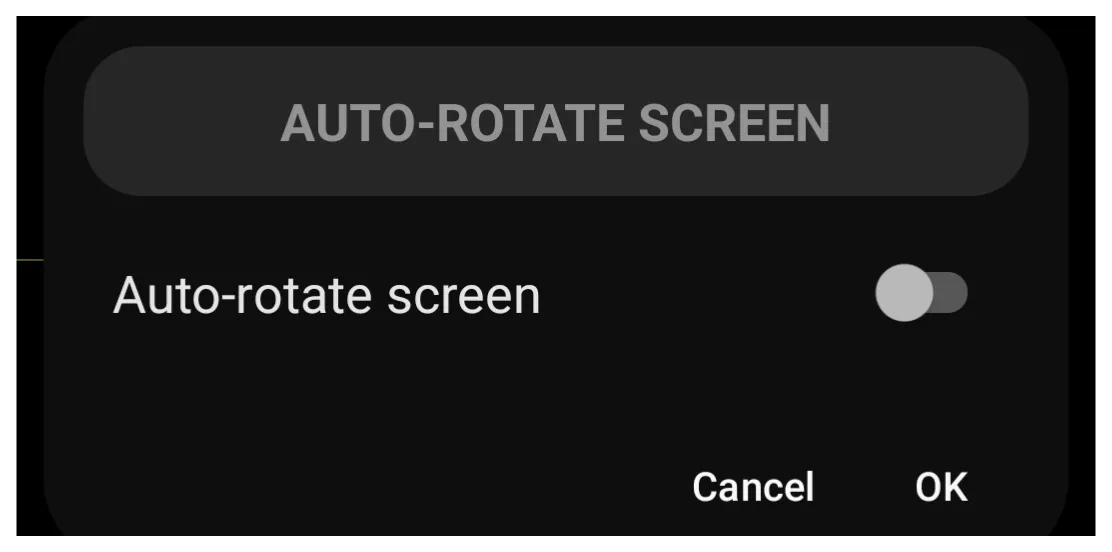
- Auto-rotate screen accommodates the screen orientation to the user's eye irrespective of the device orientation. The device itself has android settings to set this state on or off. This launcher action allows the user to set the state without requiring diving into the android setting or its quick tiles. When selecting this launcher action, the user typically sets two separate actions, on and off which will counteract the current android state. The user will designate this slider button (left and default) or on (right). This is not a toggle for the screen or gesture used to activate it, but a discreet action state, therefore requiring two objects or gestures.
Brightness level
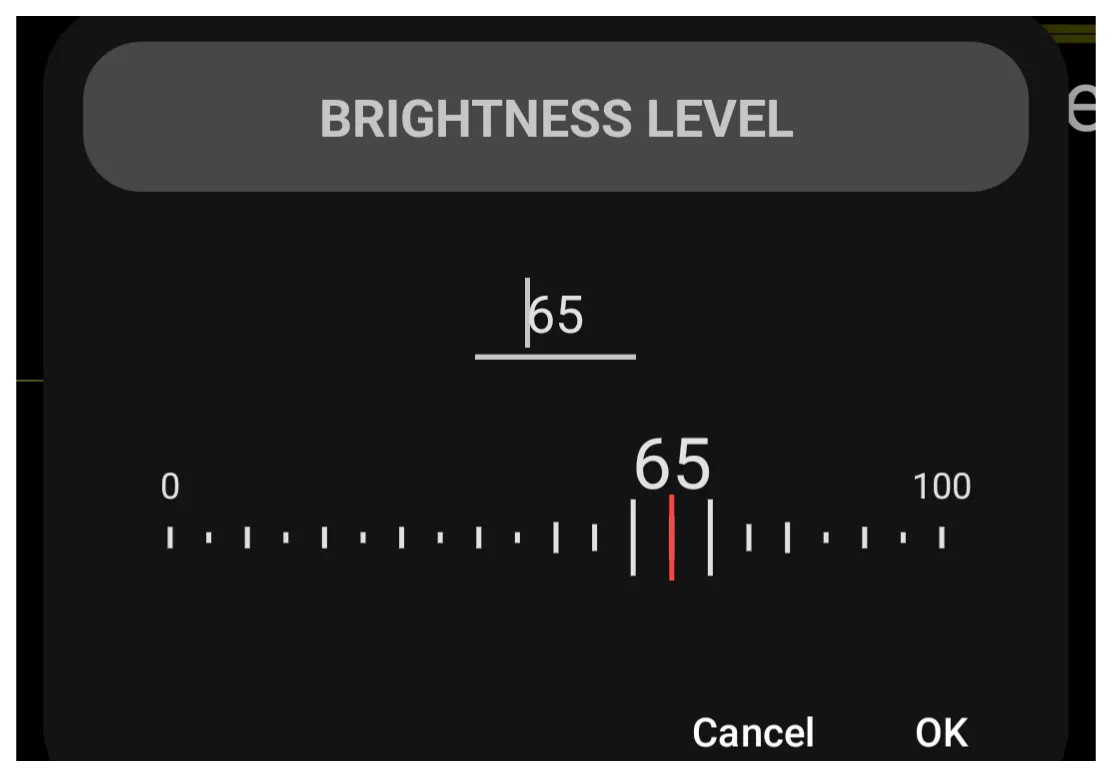
- Again, this is a discreet setting for a specific level of screen brightness (value from 0-100). It is not a variable slider. It could easily be used to set indoor-daytime, outdoor, or bedtime setting levels but would require 3 objects or a separate gesture for each setting. When selecting this launcher action, the setting dialog opens to this brightness level dialog. Permission required: Allow modifying system settings.
Media volume level
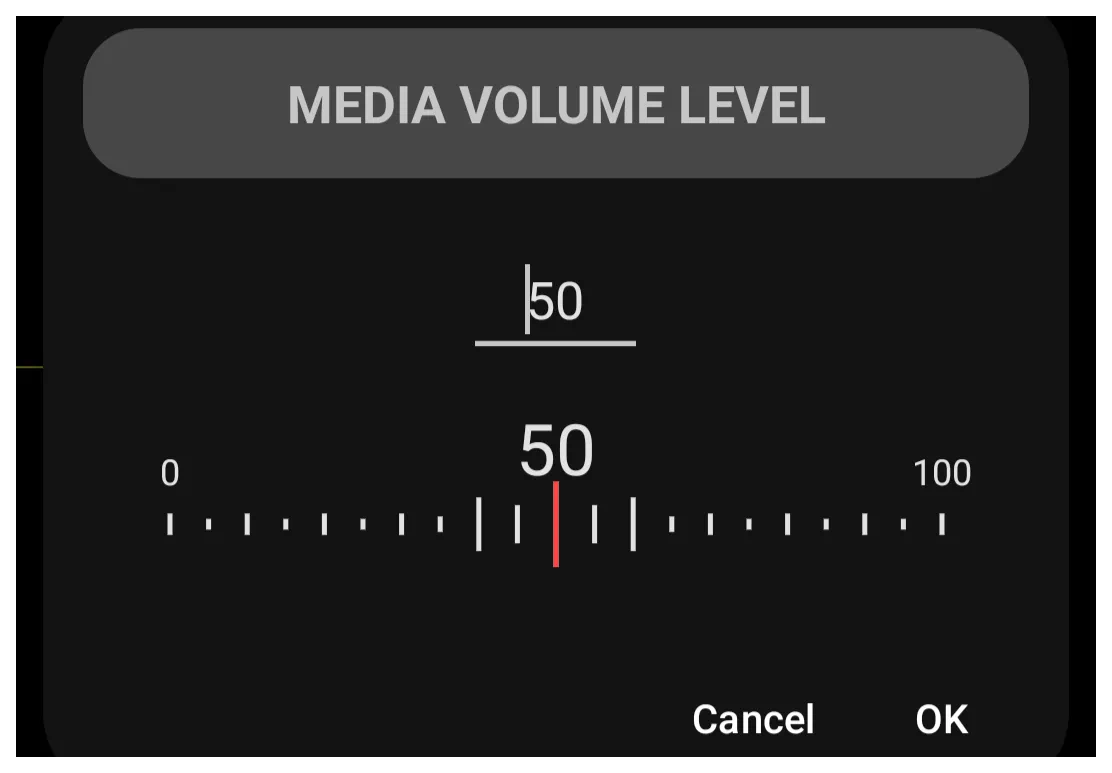
- Setting media volume level is similar to brightness level, in that it is for a specific level not variable levels. It is adaptable to scenarios (church, game, office) but could be easily hacked to appear as a quasi-slider with each level “bulb” along a “slide line” being a discreet media volume level object. The media volume dialog has a data value range of 0-100.
Do not disturb
- This is Android's feature to silence or hide notifications, ringtones, alarms, etc. during user customized times. The launcher actions is discreet, either on or off, to override the device's current system on/off setting (but not the user customized features). This is a convenient design method to keep setting control within the setup design and not rely on android access. Using this will require both on and off object when setting the state in the Do Not Disturb dialog.
WiFi
- The launcher action sets wi-fi on or off. To overcome an android limitation, Total Launcher has developed a utility
 TotalTool which is automatically offered for download (through a page on the developer's blog: TotalTool utility to the user when initially selecting to use this launcher action.





This download is an apk file and for convenience just search Google for “apk”, download one with installer in the title. Install it to the device. Run it and it will find TotalTool (if downloaded to the same device), select it, and installation is completed.
The setting for on/off is one-directional, not toggle. Each of the objects will override an opposite system state when activated.
As of October 27, 2025 the WiFi on/off launcher action does not work and is considered deprecated most likely due to TotalTools not addressing the appropriate Android version level. A #BugReport was reported but to date, no change has been noted in updated versions or performance.
Bluetooth
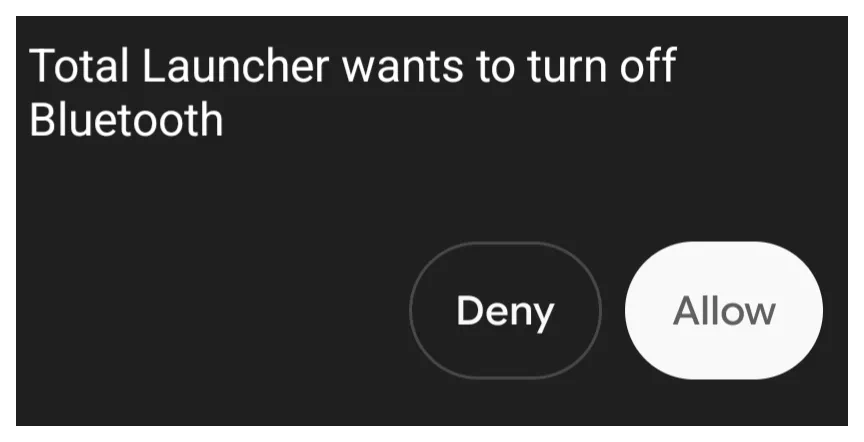
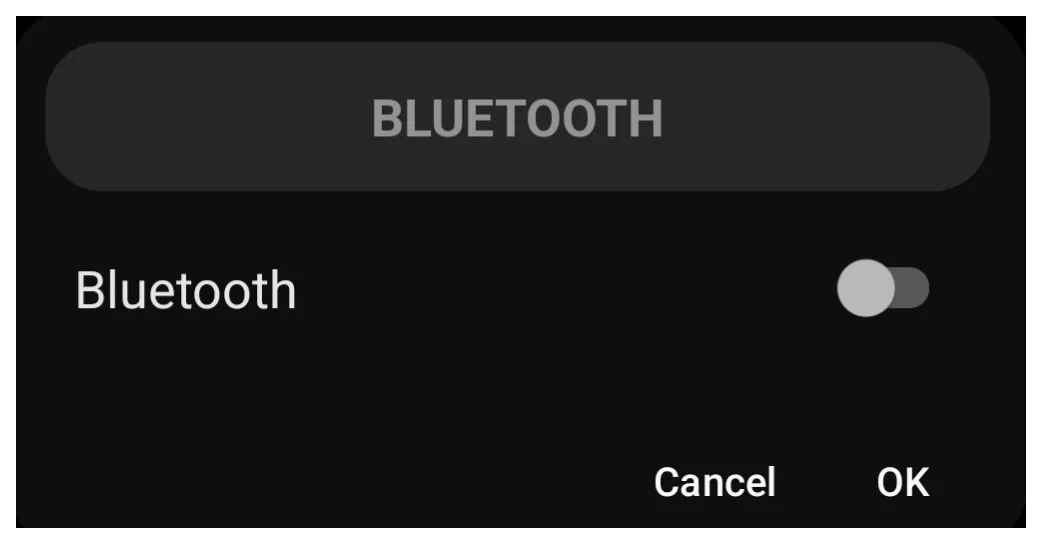
- For the initial request to change the state of the devices Bluetooth, Total Launcher will request the user's confirmation with a screen "toast". Following that, the created launcher action objects (two: an on and an off) will perform the bluetooth state designated when using the bluetooth dialog.
Play a sound
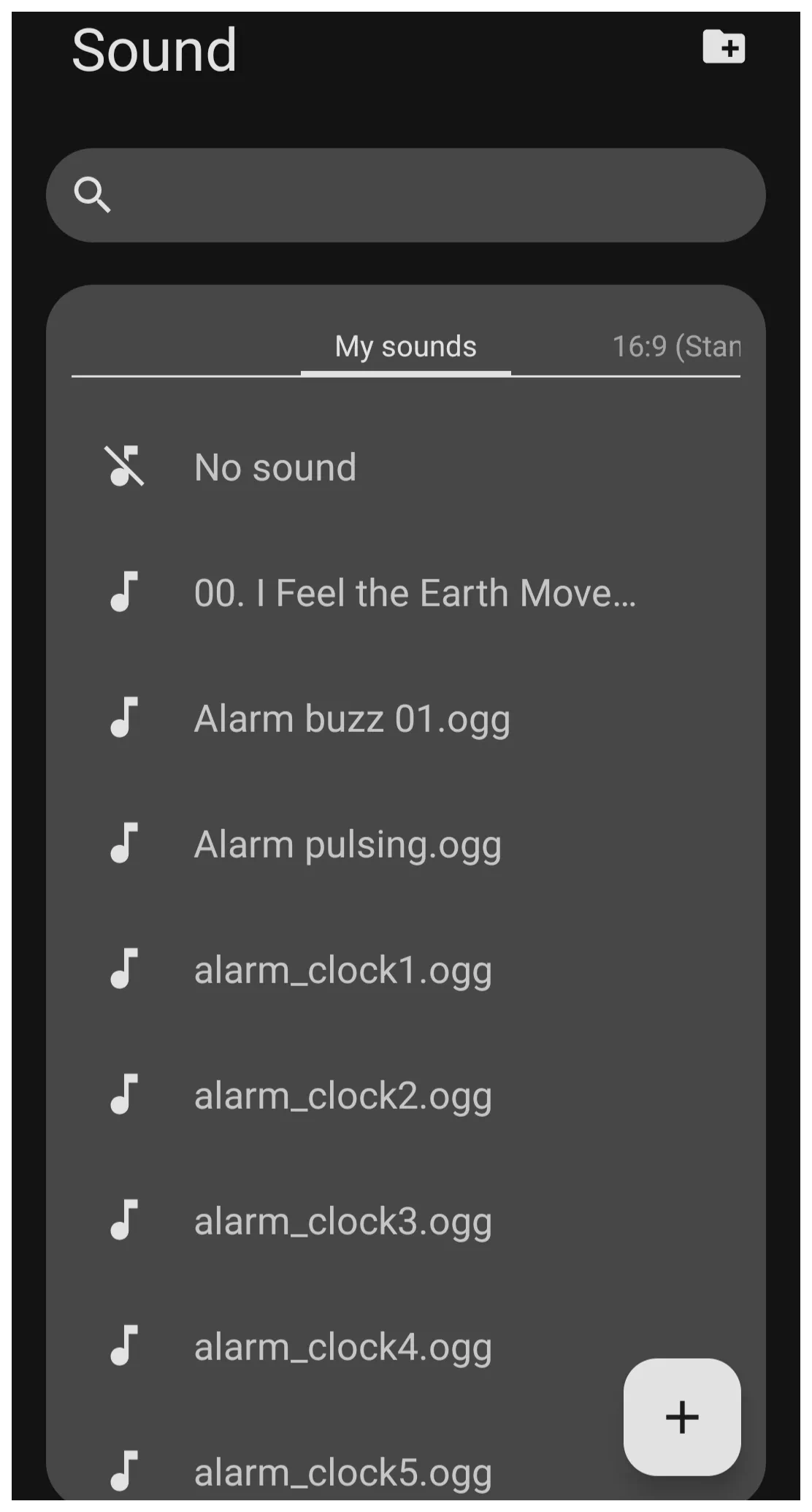
- This launcher action could play right into the hands of a good setup designer … choose any sound from the launcher's Resources Sound library and it's good to go. Although this action links a single audio file to the target object, the launcher offers its Tap-on-Action of five results based on object activation (tap, and swipes left, right, up, or down). So the results can be creative. The user will select the specific object's sound from the dialog.
Launch browser
- Choosing this action will default to the Google Chrome browser overriding the device's default browser. An alternate work-around could be using the launcher action Open URL and setting the target to the URL of the desired browser service.
Launch calculator
- This will open the device's default calculator (by Google).
Launch calendar
- This will open the device's default calendar (by Google).
Launch camera
- This will open the device's default camera (by Google).
Launch contacts
- This will open the device's default contacts app (by Google).
Launch phone
- This will open the device's default phone app (by Google).
Launch messages
- This will open the device's default app, Messages (by Google).
Launch email
- This will open the device's default app, Gmail (by Google).
Launch gallery
- This will open the device's default app, Photos (by Google).
Launch map
- This will open the device's default app, Maps (by Google).
Launch market
- This will open the device's default app, Play Store (by Google).
Launch music
- This will open the device's default app, YouTube Music (by Google).
Launch alarm
- This will open the device's default app, Clock (by Google).
Select an app
- This will place a default object on the page. The user has 2 choice of use:
- Pre-select an action
- Select the object to highlight it, tap Option, choose a “Tap-on-Action” and then pick application, window, folder, launcher action, or sequence. This will “hard code” that choice for repetitive uses.
- Choose from a list of -ALL- applications
- Accept the default object (or change its form/text). Now when tapping the object for action, the user is shown a vertically scrolling list of all application icon with title on the right from which to choose. This option gives the user an “on the fly” choice in all future uses.
Open URL
- Think of this as the “King of Customization” or the “Gateway to the Internet”. Just hard-code any URL into the presented dialog. A user now in control!

Comments & Feedback
Toby Lancer is ready to help! Look for the Quick Help form:
► Desktop: left sidebar located near the bottom for Private to Admin
► Mobile: 3-bar menu at page top.
► Use the Discussion section below to share any experiences and communications with other Total Launcher users.
► Any Registered User can directly update this and any wiki page if desired.
Moderation: To keep the manual clean, all comments are held for appropriateness review. Preview any comment before submitting it. It will not display after submission until reviewed. So, please, do not resubmit.
Formatting: If using any code snippets place them inside code tags (e.g., 'code') using double single quotes (') before and after to keep them readable.
Be Kind: This is a community effort. Please keep feedback constructive and on topic.
~~DISCUSSION~~